

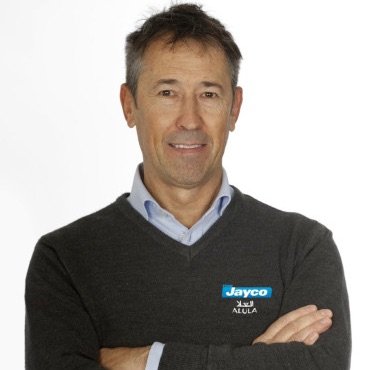
Beginning & Background
Brent Copeland was born on February 29, 1972 a leap-year birthday in Johannesburg, South Africa, into an Anglo-Saxon family with Scottish roots. Growing up in Roodepoort, a working-class suburb west of the city, he attended John Orr Technical School in central Johannesburg, where the seed of an unlikely dream was already taking root. From his earliest years, the massive climbs of the Alps and the Dolomites fascinated him images of a European cycling world that felt worlds away from the flat, sun-baked streets of Johannesburg but one he was quietly determined to reach.
That dream, however, would have to wait. At just 17, Brent was called up for mandatory military service in the South African Defence Force. He wasn’t selected for the SADF’s sporting division, which would have kept him racing. Instead, he served his country in full uniform and at 18, found himself stationed in Angola, in one of the most turbulent corners of a continent at war. It was an experience that shaped him at a foundational level: a teenage boy forced into the realities of discipline, hardship, and survival long before most of his peers had even thought about what they wanted to do with their lives. It was the first time he would prove, under real pressure, that he could endure.
The Spark & Motivation
Returning from military service, Brent threw himself back into cycling racing for clubs like Woodstock Cycles and Lanco, gradually rebuilding his form and sharpening his ambition. Selected for the South African national team, he competed in events like the Rapport Toer and the Tour of South Africa. But he had a specific goal in mind: Europe. He didn’t want to follow the other South African riders who went to Belgium; the terrain and racing style there didn’t suit him. His eye was set on Switzerland on the mountains, the elegance of the European peloton, and the fierce competition of the elite amateur circuit.
In 1994, he made the leap. Moving to Switzerland to race with Velo Club Lugano, he found himself lining up alongside riders who would go on to become world champions including Oscar Camenzind and Rubens Bertogliati. It was a baptism by fire, and it confirmed everything he had believed: this was the world he belonged in, and he was willing to do whatever it took to stay in it. He gave himself a clear target turn professional before the age of 25 and when that window closed without a contract, he simply found another door into the sport he refused to leave.
Challenges & Obstacles
Elite amateur racing in Europe has a ceiling and Brent hit it. When VC Lugano formed a joint venture with Japanese team Nippon Hodo, Brent was offered the chance to stay in the sport by taking on a mentorship and carer role for the Japanese riders. He accepted without hesitation. From there, he enrolled in massage therapy, sporting director, and team management courses building the credentials that would carry him further than a racing contract ever could have.
He became a soigneur: the person who tends to riders’ bodies, prepares their food, rubs their legs, and drives support vehicles in the shadows of a race convoy. It was unglamorous, demanding work but it was a foot in the door, and Brent understood the value of being inside the system. When he stepped into the Lampre-Daikin team car as directeur sportif, he was just 27 years old the youngest sporting director in the upper echelons of professional cycling. “I was only 27 years old then,” he recalls. “Lampre-Daikin had promoted me to the role of sporting director because of a change in the UCI rules.” A rule had required the second team car to be driven by a licensed DS and Brent, who had been driving that car as a soigneur and already held the license, was the natural fit. Sometimes opportunity doesn’t announce itself. Sometimes it simply appears, and you have to be ready.
Turning Points & Growth
One of Brent’s most quietly significant contributions to professional cycling happened early in his time at Lampre-Daikin: he was responsible for bringing Robert Hunter “Robbie” Hunter to the professional level. When Hunter retired in 2013 after a 16-year career, Brent tweeted simply: “Feels like just the other day you came to Europe.” It was a tribute that said everything. Hunter went on to become the first South African to start the Tour de France in 2001, and in 2007 became the first South African and first African to win a stage in the race’s history. The quiet role Brent played in making that possible represents one of the most meaningful acts of mentorship in South African sporting history.
Throughout his decade as a directeur sportif at Lampre, Brent worked alongside some of the most celebrated cyclists in the sport’s history: Gilberto Simoni, Pavel Tonkov, Jan Svorada, Damiano Cunego, Alessandro Petacchi, Filippo Pozzato, and the legendary Frank Vandenbroucke. He directed world champions Camenzind, Igor Astarloa, and Alessandro Ballan from the team car. It was an education in elite performance at the very highest level, and he absorbed every lesson.
From mid-2009 through 2012, Brent made one of the most unconventional pivots in professional sport: he stepped into the world of MotoGP. Working as coordinator and training partner for American MotoGP legend Ben Spies who joined Yamaha Factory Racing alongside reigning world champion Jorge Lorenzo in 2011 Brent spent three seasons at the pinnacle of motorcycle racing. “Ben is such a machine. He’s so precise it’s such a sense of satisfaction working with him,” he said at the time. The discipline, marginal-gains mindset, and performance management skills absorbed in the MotoGP paddock returned with him when cycling called again.
That call came in 2012, with a project unlike anything else in the sport: MTN-Qhubeka the first African team to obtain Pro Continental status in professional cycling. Brent came aboard as European manager, building the team’s entire infrastructure in Italy from scratch. It was pioneering work, and the team’s very first season in European competition produced one of the most stunning upsets in Monument history, when Gerald Ciolek won the iconic Milano-Sanremo.
From MTN-Qhubeka, Brent returned to Lampre as general manager, then helped launch Bahrain-Merida from zero in 2017 signing Grand Tour champion Vincenzo Nibali as the team’s cornerstone, followed by Mikel Landa and other elite names. In 2020, he accepted his most defining role yet: general manager of what is now Team Jayco AlUla, guiding its rebrand and securing its WorldTour license through 2028 even steering it back from the brink of collapse in late 2025 when sponsorship instability brought the team within days of disbanding.
Achievements & Milestones
The numbers accumulated under Brent Copeland’s stewardship tell a remarkable story. As general manager, he has overseen a total of 300 victories 80 of them at WorldTour level a record built race by race, season by season, across multiple teams and three decades of elite sport.
Over the course of his career, he has had the privilege of working with five World Champions as a sports director or manager: Oscar Camenzind, Igor Astarloa, Alessandro Ballan, Rui Costa, and Rohan Dennis a collection of champions that few managers in the sport can match. As a sports director, he worked with legendary names including Franco Ballerini, Frank Vandenbroucke, Gilberto Simoni, Pavel Tonkov, Jan Svorada, Damiano Cunego, Alessandro Petacchi, and Filippo Pozzato. As general manager, he has guided the careers of Vincenzo Nibali, Simon Yates, Adam Yates, Michael Matthews, Mauro Schmid, Dylan Groenewegen, and many others.
Among his proudest individual contributions is the signing and development of riders who carry cycling’s continental diversity forward including Tsgabu Grmay of Ethiopia, one of the gifted African athletes he has described as a privilege to work with. He was nominated as South African National team manager for three editions of the World Road Race Championships. And in March 2024, his peers in the sport elected him president of the AIGCP making him the official representative of professional cycling’s teams globally. He was the first South African ever to hold a general management position at WorldTour level in professional cycling, and the first to reach the AIGCP presidency.
Values & Philosophy
Brent Copeland is, at his core, a builder. His entire career has been defined by a willingness to start from nothing whether as a soigneur finding his footing in Europe, a 27-year-old DS commanding a race car under pressure, a manager constructing Africa’s first professional team from an empty service course in Italy, or a general manager steering a WorldTour team back from collapse. He plays the long game, always.
The philosophy that runs through his coaching, management, and advocacy is one of sustained excellence over quick results building structures that outlast any single sponsor, season, or star. As AIGCP president, he has been frank about the inequity he sees at the top of the sport: budgets between the wealthiest and most modest WorldTour teams can differ by 100% or even 200%. He fights for a fairer structure not from idealism, but from 30 years of watching how the sport actually works from the inside.
Impact on Others
Few people in professional sport have opened as many doors for others as Brent Copeland. His role in bringing Robert Hunter to Lampre-Daikin in 1999 set in motion a career that made history: Hunter became the first South African to start the Tour de France and the first African to win a stage in the race. That single act of mentorship reverberated across a generation of South African cycling.
He was the first South African to work at general management level in a professional WorldTour cycling team and he has used that position to actively bring others along. His investment in African cycling has been personal and unwavering: from helping establish MTN-Qhubeka’s European presence in 2013 to nurturing talents like Tsgabu Grmay and Hagos Berhe at Team Jayco AlUla, he has been a consistent force for expanding who the sport belongs to
He has applied that same principle to women’s cycling publicly equalizing minimum salaries between his team’s men’s and women’s squads and urging other WorldTour teams to invest seriously in their women’s programs. Through the formal partnership between Team Jayco AlUla and Hagens Berman Jayco, he has created a structured development pipeline a clear route from talent to the WorldTour that didn’t exist before he built it.
Looking Ahead
Brent Copeland does not appear to be a man interested in slowing down. At Team Jayco AlUla, the work continues: building on 300 victories, nurturing the next generation through the development pipeline, and expanding the team’s women’s program under Liv AlUla Jayco. As AIGCP president, he carries the collective ambitions of professional cycling’s teams into negotiations that will shape the sport’s structural future for years to come pushing for fairer funding models, better opportunities for riders from underrepresented regions, and a version of professional cycling that is built to last.
For a boy from Roodepoort who served in Angola at 18, raced in Switzerland at 22, mentored the first South African to win a Tour de France stage, and built his way from soigneur to the presidency of professional cycling’s most powerful team association the story is, in many ways, still being written. And if the past 30 years are any guide, the chapters ahead will be built the same way all the others were: one hard, deliberate, uncompromising step at a time.
Follow Brent Copeland on Instagram:
https://www.instagram.com/brent_copeland?igsh=MTA1YzFhN294dHl4OQ==